
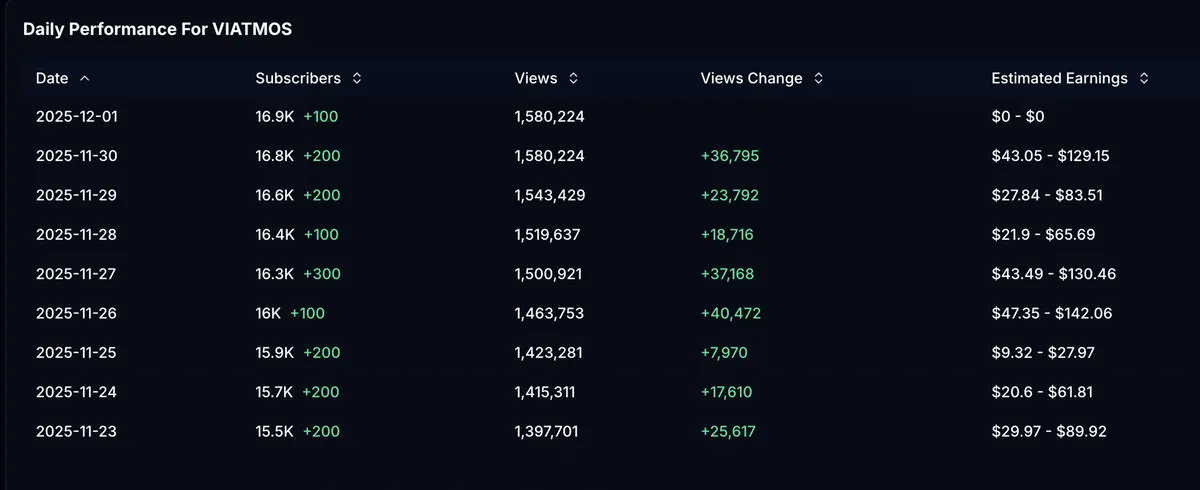
Making ¥100K/Month Writing Songs with Suno? I Crunched 3 Days of Data—One Path That Actually Works
Breaking down the Suno AI songwriting income hype: real streaming payout math, copyright risk, bot-traffic bubbles, and one monetization path ordinary creators can execute.
“Make ¥100K a month writing songs with Suno”—headlines like this are everywhere lately. My first reaction wasn’t excitement. It was: where does the money actually come from?
I spent three days cross-checking public funding docs, platform payout rules, copyright lawsuits, and a few verifiable case studies. The conclusion isn’t glamorous, but one path is genuinely workable.
A 40-second song is real; “¥100K/month” needs unpacking
Suno can compress song production to minutes. Feed it style, mood, and lyrics, and you get a full vocal track with arrangement in under a minute.
The tech and speed are real. But between “can write songs” and “can earn ¥100K/month from songs” sits an entire chain—payout rules, copyright compliance, platform moderation, and distribution skills. Miss one link and the number collapses.
Three data sets I dug into
1. Streaming payouts can’t support ¥100K
Creator payout on major platforms is opaque, but industry estimates converge: roughly a few cents to ~¥0.20 per 1,000 plays.
Work it backwards: ¥100K/month implies tens of millions to hundreds of millions of monthly plays on natural traffic alone. That scale is nearly impossible without artificial amplification.
Spotify removed 75 million AI “junk tracks” in 2025. Deezer estimates ~150,000 AI tracks submitted daily, with ~70% flagged for fraud or bot traffic. Platforms are tightening—not opening the floodgates.
| Metric | Data / trend |
|---|---|
| Typical payout per 1K plays | ~¥0.03–0.20 |
| Monthly plays needed for ¥100K | ~50M–300M |
| Spotify AI junk takedowns (2025) | 75 million tracks |
| Deezer daily AI submissions (suspect share) | ~150K / ~70% flagged |
The math on “upload in bulk, wait for royalties” simply doesn’t close.
2. Supply is exploding; the royalty pool isn’t
Suno’s funding materials cite 7M+ AI songs generated daily and nearly 100M users. Supply is scaling exponentially.
But the global recorded-music royalty pool is finite. IFPI’s 2026 report puts 2025 revenue at ~$31.7B, with paid streaming crossing $22B for the first time—growth, yes, but not proportional to billions of new AI tracks.
Streaming royalties are largely zero-sum: every AI play displaces a human creator’s share. Platforms won’t pay full royalties on millions of new AI uploads every day.
3. Copyright bills are coming due
Suno’s copyright cases grew from 560 tracks to 61,000; Universal and Sony still litigate while Warner signed licensing deals. Udio has settled with major labels too.
Translation for creators: AI’s low production cost gets eaten by licensing. Free tiers generate songs at no charge to you—not to the platform’s legal ledger. And if training data requires licenses, iteration slows and costs rise.
Practical risk: commercial rights depend on your Suno plan and terms. Subscribing doesn’t mean “generate and resell anything anywhere.”
What high-income cases are actually selling
Verifiable examples rarely rely on pure streaming royalties:
- Custom songs: weddings, milestones, brand spots—hundreds to thousands per job; Suno handles speed.
- Short-video BGM / podcast intros: clients pay for fit and turnaround, not Spotify plays.
- Content + services: tutorials, prompt packs, done-for-you work—knowledge and labor, not passive royalties.
- Bot-traffic arbitrage: inflated numbers, high ban risk—not a real business.
“¥100K/month” is usually a mix of the above plus survivor bias. Equating “40-second songs” with “¥100K/month” doesn’t hold logically.
| Monetization | Barrier | Realistic monthly income | Sustainability | Main risk |
|---|---|---|---|---|
| Pure streaming royalties | Low | Very low (needs billions of plays) | Poor | Bans, throttling |
| Custom songs / BGM gigs | Medium | Low–mid thousands | Good | Quality, client pipeline |
| Content + gig combo | Medium | Depends on ops | Good | Consistent output |
| Bulk copyright sales | High | Unstable | Fair | Compliance, review |
One path that works: use Suno as production, not a royalty ATM
After three days of numbers, the only repeatable route for ordinary creators is treating Suno as a production tool inside a defined commercial niche—not passive streaming income.
Step 1: Pick a vertical
Don’t be generic. Stable demand niches:
- 15–60s BGM for short-video creators
- Small-business promo soundtracks
- Podcast / audiobook intros and outros
- Event warm-up and live-stream background music
The narrower the niche, the easier pricing and sample libraries become.
Step 2: Build a small sample library
Generate 10–20 representative tracks in one vertical, organized by mood × tempo × use case. Clients pick from samples faster than describing from scratch.
Keep prompts simple but stable: style + mood + instruments + length + use case. Five fields, fewer rewrites.
Step 3: Lock a delivery workflow
A lightweight pipeline that works:
- Confirm style, mood, use case, length with the client
- Generate 3–5 directions in Suno; client picks one
- Human QC: structure, lyrics, “template fatigue”
- Light DAW edits if needed—trim, levels, cleanup
- Deliver files + basic usage notes
Turnaround: 1–3 hours per gig. Suno compresses demo production from days to minutes.
Step 4: Show work publicly, close deals privately
Post process clips, before/after, and finished audio on short-video platforms—better conversion than flexing play counts. Put contact or booking info in bio/comments.
First-three-month goal isn’t ¥100K—it’s 10+ completed gigs, three recurring style requests, and a fixed sample library + SOP.
Pitfalls to avoid
Pitfall 1: “Generated = commercially mine.” Confirm your plan’s commercial terms before taking business clients.
Pitfall 2: Spam-uploading to streaming. Platforms are down-ranking low-effort AI floods.
Pitfall 3: No differentiation. Generic AI love songs blur together; paying clients want story and brand fit.
Pitfall 4: Treating outliers as the norm. A window exists, but copyright rules and moderation are tightening. Suno stays a tool—not a money printer.
Bottom line
Forty-second songs are real. High earners exist. Connecting the two without payout math, copyright cost, and ops work is the myth.
If you want to judge Suno output quality yourself, the fastest move is to generate a few tracks—build ear training first, then decide whether it fits your workflow.